
Overcoming Body Shame: Where It Comes From and How to Heal with Angelica Gonzalez
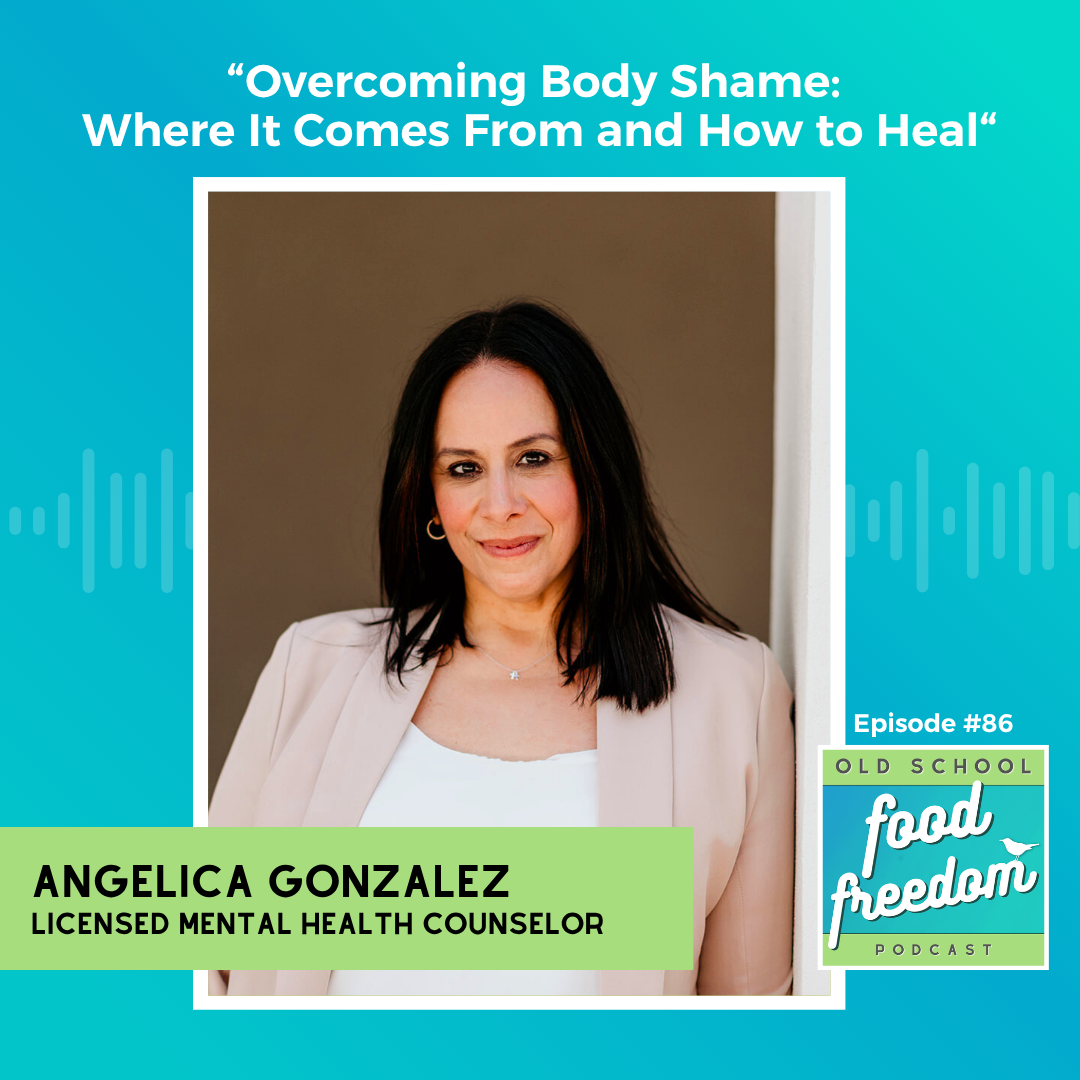
"You are not your body. You're not your worst thought. You're not even your last meal. And Jesus loves you."
You've been carrying something heavy into summer, maybe a dread that starts somewhere around the time the temperatures rise and the layers come off. Or a voice that gets louder the closer swimsuit season gets, telling you that your body is wrong, that you should hide, that everyone will notice. If that voice feels familiar, this conversation is for you.
Today, Chrissy is joined by Angelica Gonzalez, multilingual psychotherapist and founder of Eden Therapy Co., for a deeply honest conversation about overcoming body shame, where it comes from, why it gets so loud in summer, and what it really looks like to move toward your body with the same compassion Jesus moves toward you.
Angelica is not just a clinician. She is someone who has done this work personally and professionally for over a decade, integrating CBT, DBT, psychodrama, and EMDR with adolescents, adults, families, and groups. She began her career at Miami Children's Hospital, has taught at the University of Miami, and has spoken nationally and internationally on trauma and recovery. She also hosts the podcast Eden's Table, exploring the intersection of faith, psychology, and healing. And she has been a part of the FINDINGbalance family for a long time, which means this conversation has the kind of warmth and realness that only comes from two people who have walked a road together.
Here's what we cover:
What shame is, and how it is different from guilt, and why that distinction matters for your healing
Where the shame voice is really coming from, and why it is almost certainly not your voice
How body checking behaviors develop as a response to shame, and what they are trying to protect you from
Why swimsuit season triggers such intense body image anxiety, and the core memories that get activated when the layers come off
What diet culture and comparison are doing to your nervous system, and why they will never give you what you are looking for
How to move from body shame toward self-compassion, one small step at a time, including two practical tools Angelica uses with her own clients
What it looks like to apply the fruit of the Spirit to your relationship with your body
Why body image healing is one of the last things worked on in eating disorder recovery, and what that means for where you are right now
How to write yourself a letter, with Jesus, that says what you actually need to hear this summer


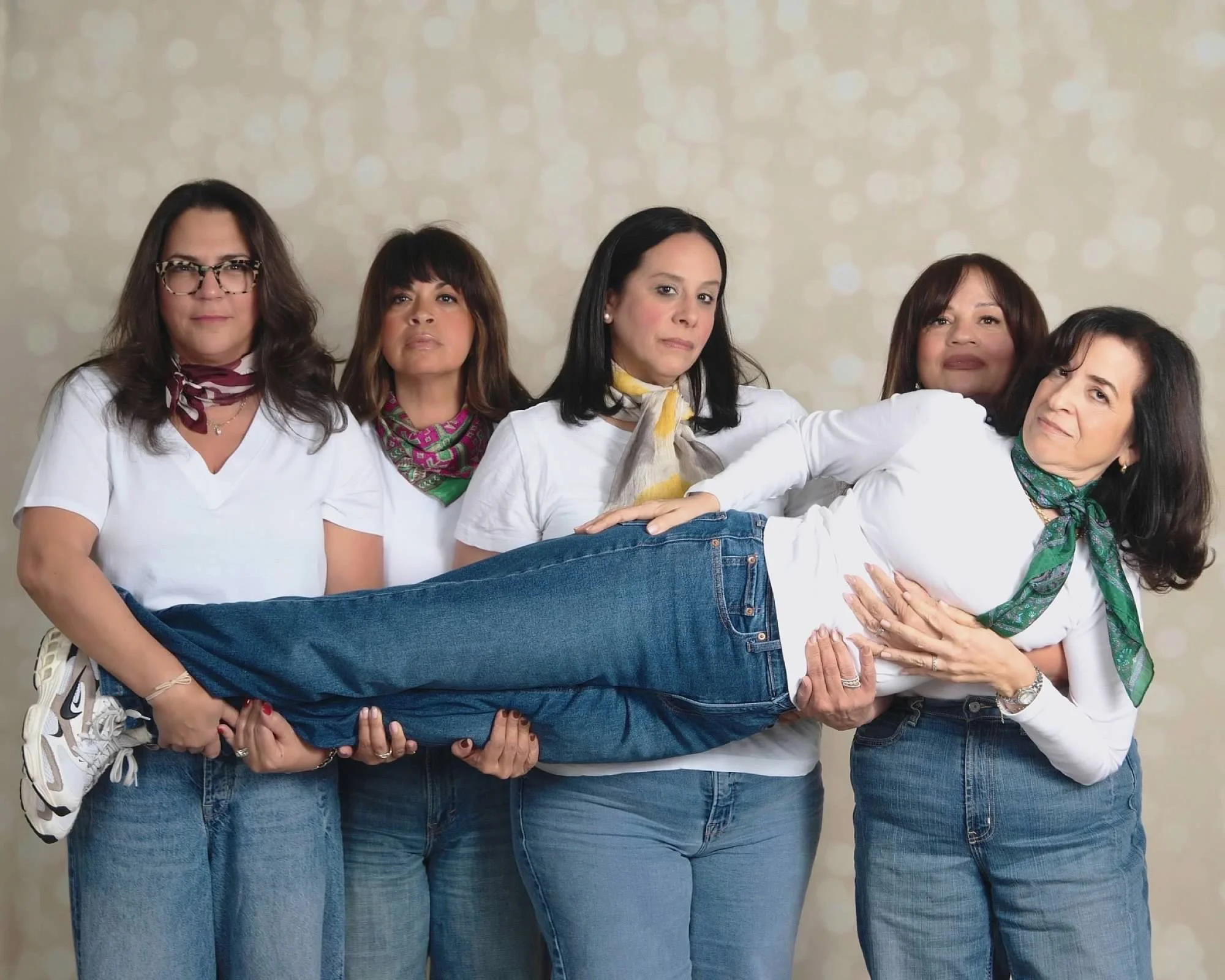
Angelica and her friends proving that JCPenney photo shoots are still very much a thing, and that nobody remembered what anyone was wearing, only that they could not stop laughing.
Friend, if you have ever dreaded putting on a bathing suit, stood in front of a mirror and felt that familiar wave of shame, or spent another summer hiding from your own life because of how you feel about your body, Angelica has something to say to you: shame tells you to hide. But you were made to be a warrior. And the truth about who God made you to be is so much louder than the lie, if you let it be.
"Stop fighting with your body and fight the enemy instead." — Angelica Gonzalez
Overcoming body shame is not about getting your body right before you show up to your life. It is about showing up anyway, to the pool party, to the beach, to the backyard in your swimsuit with the music on and the lemonade made, AND letting Jesus meet you right there in the middle of the discomfort. Body image healing is slow and real, and this conversation is one more step on the path.
You are not your worst thought about your body. You are not your last meal. You are not the lie the enemy has been whispering since the garden. You are wonderfully made, and this summer can be different.
If this episode spoke to something you have been carrying, would you share it with a friend who needs to hear that shame does not get the final word?
We’d love to hear your thoughts, so please drop us an email at admin@findingbalance.com, send us a voice message via SpeakPipe, or you can also subscribe for more practical episodes coming your way.
More About Angelica Gonzalez
Angelica is a multilingual psychotherapist and founder of Eden Therapy Co, specializing in eating disorders, trauma, and self-injury. With over a decade of experience, she integrates CBT, DBT, psychodrama, and EMDR in her work with adolescents, adults, families, and groups. She began her career at Miami Children’s Hospital, having worked in psychiatric and eating disorder inpatient settings. She taught at the University of Miami and has spoken nationally and internationally on trauma and recovery. Angelica hosts the podcast Eden's Table alongside her team, exploring the intersection of faith, psychology, and healing.
Hello Freedom Community
Our Hello Freedom community is launched! This is a Christ-centered space to find connection, encouragement, and gentle steps toward freedom from food and body-image struggles. No pretending, no fixing yourself first, come just as you are. If you want in, your next step is to join us at findingbalance.com/community.
You were not meant to walk this alone. We're saving a seat for you!
Resources Mentioned
Restored: A biblical healing journey from your eating disorder to freedom.
Related Episodes
Escaping the Cycle of Shame in Recovery with Travis Stewart
A Grace-Rooted Approach to Navigating Diet Culture as Christians with Megan Becker
Overcoming Food and Body Shame Through Old School Story Work with Kristen Bunger
Reclaim Your Summer with Heather Creekmore
Declutter the House & Shame with Susan Stewart
Mentioned Scriptures
Galatians
Connect with Angelica Gonzalez
Christian Treatment Finder Profile
Facebook
Instagram
SpeakPipe – Send us a voice message!
CHRIST-CENTERED RESOURCES TO HELP YOU FIND FREEDOM
The Daily Vitamin eDevo: A free devotional with bite-sized truth emailed 5 days a week
Community Groups: Find connection with prayer groups and our Hello, Freedom! community.
Christian Treatment Finder: Connecting you with Christian providers experienced in treating eating issues.
Lasting Freedom Online Course: A Christ-centered, non-diet course to work through false beliefs about food and weight so you can live free from disordered eating and body image issues.
CREDITS
Interlude music by “Hotham” – Morning Thoughts
Intro music by “MokkaMusic” – Old Jeans (Funk)
Wrap-up music by Jesse Quinn – Christian Instrumental
Production & Editing by Leah Bryant Co
The content in this podcast is for informational purposes only and is not intended to diagnose, treat, or prescribe a particular course of action. If you have, or suspect you may have, an eating disorder, please consult your healthcare provider. If you desire to receive faith-based care, visit ChristianTreatmentFinder.com to browse professionals with a Kingdom campaign against eating disorders.
More about the Old School Food Freedom Podcast
In today’s diet-culture society, food issues and body hatred have become the norm. But you were created to be FREE. Welcome to Old School Food Freedom, where we go back to the basics, God’s basics, for how we view food, our bodies, and our worth.
Hosted by FINDINGbalance Executive Director Chrissy Kirkman, this podcast features Biblically-sound experts, thought-leaders, artists, and everyday people who will inspire you to interrupt negative cultural soundtracks and rediscover God’s original design for your relationship with food and your body.
This show will deliver practical, faith-filled insights on how to break free from diet culture and body shame through the lens of scripture. If you’re looking for guidance on how to heal your relationship with food while deepening your faith, you're in the right place.
We’ll answer questions like
What does the Bible say about food freedom?
How can I overcome an eating disorder or disordered eating with Jesus?
What is the biblical perspective on diet culture?
How can I find peace with food as a Christian?
What does it mean to treat your body as a temple in relation to eating?
How can I break free from diet culture with Jesus?
How can I align my eating habits with biblical teachings?
What are the first steps to finding food freedom in Christ?
This podcast is for anyone ready to walk away from diet culture and into the freedom that Christ offers. Whether you’re recovering from an eating disorder, disordered eating, wrestling with body image, or simply craving a more peaceful relationship with food, this space was made for you.
If you want to experience true food freedom with Jesus, this podcast will give you the encouragement, truth, and tools to do just that.
The unedited transcript for this episode of Old School Food Freedom
Angelica Gonzalez [00:00:49]: up and down the road again.
Chrissy [00:00:52]: Yes, we have been geeking out on Golden Girls, like right before we hit record, and it was just so much fun. So thanks for being here. I'm so glad you're here.
Angelica Gonzalez [00:01:01]: No, thank you. I always love the opportunity to be able to join you in all things that you do. So thank you so much.
Introduction of Angelica Gonzalez
Chrissy [00:01:09]: Yeah, you're welcome. So let me tell you a little bit about Angelica, if you are not familiar. So she is a multilingual psychotherapist and founder of Eden Therapy company specializing in eating disorders, trauma, and self injury. With over a decade of experience, she integrates CBT, DBT, psychodrama, and EMDR in her work with adolescents, adults, families, and groups. She began her career at Miami Children's Hospital, having worked in psychiatric and eating disorder inpatient settings. She taught at the University of Miami and has spoken nationally and internationally on trauma and recovery. Angelica hosts the podcast Eden's Table alongside her team, exploring the intersection of faith, psychology, and healing. We will have a link in the show notes to the podcast and all other ways you can connect with Angelica and her team.Chrissy [00:02:07]: And so, friend, if you have ever felt trapped like me because I've been there in a cycle of body checking, swimsuit season dread, or shame after eating, this is the conversation for you today. So we're gonna be diving into body shame and talking about where that shame voice is actually coming from, how to sit with the discomfort of numbing and what it looks like to move with compassion toward yourself the way Jesus does. So if this is not your first time listening, pretty much every episode I'm saying the same thing. It's like in the Bible, when the Lord repeats something, it's because it's super important. We need to pause and listen up.
Chrissy [00:02:54]: So what I'm gonna say again is when you're hearing this, if you feel shame rising, you know the feeling of shame — oh, I'm so embarrassed or ashamed of that, I'm so bad, I'm horrible, how could I have done, you know, all those thoughts — remember, that is from the enemy. That is not the voice of God, okay? He does not condemn us. He gently convicts us. So we're gonna walk into this conversation with curiosity. If we feel that voice coming in or feel that shame rising, we're gonna just pause and say it's okay.
Chrissy [00:03:32]: I'm gonna take a breath and just let it out and I'm gonna say, okay. I'm just gonna keep listening and be curious about what it is that's coming up and maybe what God is trying to show us through it. Right? So there's my soapbox that I've got to say every time. Okay, so you've been on the show before. It's been a long time.
Angelica Gonzalez [00:03:55]: Yes.
Old School Segment: JCPenney Photo Shoots
Chrissy [00:03:55]: I thought we were going to go in a direction with a different question. We always kick off the show with a question about what old school item or experience do you miss from back in the day? But right before we hit record, something came up and it is solid gold. So let us in on what you missed from back in the day.Angelica Gonzalez [00:04:17]: So I would say the JCPenney's photo shoots. And the reason why I say that is because there is a TikTok trend where you and your friends go to JCPenney's and you pick really awkward poses, right? Because they were — I think, Chrissy, you were saying — like, why did people used to stare off? And that was considered like a good pose. So one of my friends, it was her birthday and so we booked and we surprised her with a JCPenney's photo shoot. And you asked if they would mind if I shared. And I'm just gonna go ahead and say they would not mind because they are hysterical.
Chrissy [00:05:01]: Okay, so you're gonna be listening and can't see this, but we are going to share these pictures in the show notes, maybe on our reels. So I'm going to describe this. Can you hold that back up?
Angelica Gonzalez [00:05:11]: Oh, yeah.
Chrissy [00:05:12]: Okay, so there are five girls in the picture. They're all wearing denim jeans, white shoes, white shirts. And so it's very matchy matchy like we used to back in the day. So this picture, we've got two girls standing, two girls sitting cross legged. And then one has her hands folded on top of another girl, like with her chin resting on her head. It's so good.
Angelica Gonzalez [00:05:42]: And then there's the two that are standing have their hands on the heads of two that are sitting cross legged.
Chrissy [00:05:50]: Oh, I didn't even see that.
Angelica Gonzalez [00:05:52]: And the faces are just really like straightforward and serious. Because for some reason that's what we did back then. I don't know why, but it is what we did. And then the second picture that I would share is like a tower of all of us, just one stacked on top of each other.
Chrissy [00:06:12]: I mean, these are hysterical.
Angelica Gonzalez [00:06:15]: I highly recommend doing this because not only do you laugh so much, but honestly, we could not stop laughing because you're trying to maintain a still face when you're really just laughing. And the last one I'm going to show you — it was my friend Rachel's birthday — so she is lying across, but we are all holding her together.
Chrissy [00:06:39]: It's so fabulous. It's so good.
Angelica Gonzalez [00:06:42]: So I would say go to JCPenney's with your friends. Not that this is an advertisement, but if you're looking for a good time, just go.
Chrissy [00:06:52]: Oh, it's so, so good. My friends and I did that way back in the day. And it's so different than glamour shots, right? Glamour shots was like, next level.
Angelica Gonzalez [00:07:03]: Oh, my gosh. We gotta bring back the glamour shots too immediately. What are we talking about? Where did all those pink boas go?
Chrissy [00:07:11]: And they were staring off into space. Oh, my gosh. It's just so different now. Yeah. That is super fun. Thank you for sharing that. I'm gonna put those in the show notes because I think everyone needs to see and get that good belly laugh.
Angelica Gonzalez [00:07:25]: I agree.
Chrissy [00:07:27]: Well, and it didn't look like anyone was dealing with body shame in those. I think everybody was like, checked out of loathing.
Angelica Gonzalez [00:07:35]: We're just having a good time.
Chrissy [00:07:37]: Right. And that's fun. And what a great memory. What a great experience with your friends, not putting yourself down. Self loathing.
Angelica Gonzalez [00:07:46]: I mean, the only thing I can tell you is that we were laughing so hard that due to age we may have, you know, peed in our pants. But other than that.
Chrissy [00:07:55]: So what I'm hearing is wear tennis shoes and depends when you go, just in case.
Angelica Gonzalez [00:08:00]: You just never know, depending on your age bracket.
Chrissy [00:08:03]: Right, for sure. Yeah. And I would say most of my friends here are in my age bracket, so it's all good. Yeah, we gotta look out for each other.
What Is Shame? Shame vs Guilt
Chrissy [00:08:27]: Let's talk about this. Like, what is shame? Let's just try to understand shame first, to set that foundation. What is shame, and how is it different from guilt?Angelica Gonzalez [00:08:37]: Okay, so I love Brene Brown because she's done extensive research on shame. And one of the things that she says is that shame says I am bad, and guilt says I did something bad. So guilt is more of a behavior versus shame, being something that's more about who you are and your identity. So it basically says, like, hey, there's something wrong with you. And what happens clinically is that shame starts dysregulating your entire nervous system, and your emotions start going all over the place. So it activates fight, flight, freeze, or pain sensations. So we react with a threat response, and that's why it becomes so overwhelming.
Angelica Gonzalez [00:09:22]: If we think about it, shame targets our worthiness, our belongingness, our lovability, our visibility, our deservingness. It affects our relationship with our perception of what others see. And shame is really relational at its core.
Chrissy [00:09:40]: Shame is relational at its core. Can you give us just a little more? What does that mean?
Angelica Gonzalez [00:09:49]: Well, if you think about how we were created to live, we were created to live in relationship. And so if I feel shame, what are some of the behaviors I might start exhibiting? If you walk in and somebody's feeling shame, what do you notice?
Chrissy [00:10:07]: Maybe they're not making eye contact. Maybe they're trying to hide themselves. Like, if they're sitting on a sofa, if it's a body shame, they might try to hide under a blanket or a pillow, kind of feeling disconnected. Very disconnected.
Angelica Gonzalez [00:10:21]: And so if we think of even attachment, like, our attachment is severed from other people because this one emotion, shame, this one idea, is starting to separate us from belongingness or feeling together. So that's why shame, in a lot of ways, is relational. I mean, if we're gonna be talking about bodies, like, if you think about when you feel shame of your body, you're disconnecting from your body. You're seeing it as an object. You're not seeing it as something that was created wonderfully and beautifully. You're seeing it as an object that you have to disconnect from.
Where the Shame Voice Comes From
Chrissy [00:10:58]: So true. Okay. That's super relatable. So, like, this voice of shame — who is it coming from? Like, I just want to say, well, of course it's the enemy.Chrissy [00:11:09]: Yes, but how would you answer that question? I don't wanna assume anything.
Angelica Gonzalez [00:11:14]: Like, I always go back to the garden and I think of how the enemy was so just sneaky, and it just kind of slides in there. And so of course it's the enemy and what he uses to instill the voice of shame. So if we think of our early caregivers — did they make you feel shame about your body? Did they make you feel shame about your body in front of other people? Culturally, what are the messages in culture? Like, there's such a bias towards being thin, and sometimes that comes into our shame. Or trauma. If we've had trauma in our background, a lot of times it informs us about our body. Or even comparison with other people — that also starts informing us about our body.
Chrissy [00:12:03]: Yeah, totally makes sense. So I can say that the shame voice is not the Lord's voice. We know that.
Angelica Gonzalez [00:12:11]: No, not at all.
Chrissy [00:12:13]: And you even said when we were working through this content, it's probably not even your voice. Like, my own voice. And sometimes I think we hear in the world — your inner voice. So if I truly believe that my body is bad and where my body stores more fat than other places is terrible because no one wants this or that — I might believe that that's my voice. I'm saying that because I believe it's true. But is that still considered my voice?
Angelica Gonzalez [00:12:51]: I don't think so. I think that voice is informed by other voices, and it's not your voice. And so sometimes we just have to discern what is our voice and how do we truly feel about our bodies versus what is the enemy's voice or the voice of culture or the voice of people who we gave space to in our lives — that maybe we have to kick them out of our lives in our minds. Maybe we can't physically, but in our minds we can. And this is why I love Jesus. Turning to him and asking, okay, well, what does my Father in heaven say about my body? Does he say that I should have shame about my body?
Angelica Gonzalez [00:13:xx]: It's really interesting because Adam and Eve, they were totally living their life with their body, super happy, right? And then all of a sudden, the snake comes in. And the first thing that happens is that God is like, who told you that you were naked? And there's the first instance we start to see that this shame is really coming from the enemy. It's not coming from God, because God made us beautifully, wonderfully. He knit us perfectly together in our mother's wombs. That is the truth of who we are and how we were made.
Chrissy [00:14:06]: So we have believed a lie, and so we might be deceived into thinking that's our own voice. But if we were to strip it all back — if diet culture wasn't a thing, if sin wasn't a thing — we would not be hating our bodies. We would not be hating parts of our bodies. We would not be hating ourselves. We would be free. We would be walking with Jesus in pure Eden. In a situation where the truth reigns.
Angelica Gonzalez [00:14:43]: His truth is embedded in the fiber of who we are. And the reason why I say that is because a lot of times the reason why we turn towards our body is because our body is the most visible piece of our personality and of our identity. When you meet somebody, you don't necessarily see their heart. The first thing that you see is the outside. And those are symbols that start symbolizing if you belong or you don't belong. And that's where shame comes in to tell you you don't belong. Like, you're not X, Y, or Z. And it's all lies. It's all just lies from the enemy.
Body Checking Behaviors and Shame's Coping Mechanisms
Chrissy [00:18:48]: So with shame, like, what are some ways that it shows up in the body and then it can start to lead to body checking? What is body checking and how does that connect?Angelica Gonzalez [00:19:03]: So when we feel shame, we want to get out of it. Because a lot of us are not comfortable sitting with our feelings — which I have to say, sitting with your feelings is a good thing. It actually leads you toward what is really underneath all of your feelings. But because we don't want to sit with uncomfortable feelings, we feel like we have to do something about it. And that's where perfectionism, body checking, comparison, diet culture — all of that comes in to start to make you feel like you're doing something about it, even though you're not really doing anything about it.
Angelica Gonzalez [00:19:47]: These are shame's friends. They're like, oh, you're feeling that? I don't want you to feel that. So here's a little bit of perfectionism — be really, really high achieving so people can really focus on that and they don't have to focus on your body.
Chrissy [00:19:59]: Can you stop shouting at me, please? It's too much because I think I've just been called out louder for the person right in front of the microphone. Okay, next.
Angelica Gonzalez [00:20:10]: No, I mean, I think another one is I'm gonna be so, so nice, and I'm gonna just be the sweetest person and I'm just gonna do so, so much for other people so that that becomes my identity and my body doesn't become my identity. Right. But we are mind, body, spirit, so we're all one. And these things that we do, these impossible ideals that we set for ourselves just make us tired and cranky and hungry.
Chrissy [00:20:35]: Yeah, you know, I do know. I know it all too well.
Swimsuit Season and Body Image Anxiety
Chrissy [00:21:09]: Now we're in swimsuit season. To me, it feels like one of the most body shame filled times of the year. Because now you can wear a lot of clothes, but you're really gonna suffer — especially in perimenopause. You're already sweating. You can only take off so many layers before it could be illegal. Right. So why is swimsuit season such a shame filled time for us?Angelica Gonzalez [00:21:42]: Well, I mean, I don't know about you, but I don't really walk around in my swimsuit day to day. So I think then you're not living right? Like, just casually stroll around your house in your swimsuit — which you can do that.
Chrissy [00:21:57]: Maybe that's the place you start. But anyway, right.
Angelica Gonzalez [00:22:00]: And it could be — I think a lot of this has to do with the fact that we usually wear clothes that's more covering than a bathing suit. And so when we think about removing more layers of clothes, it becomes more vulnerability. There's more of you that is showing to the outside world. And so we can't hide in those layers. And so all of a sudden comparison, visibility, vulnerability — all of that starts coming up for us.
Chrissy [00:22:38]: Like, I'll just say I remember some high school pool parties that it wasn't really the first time, but it was the first time in high school where there were boys and girls and my body's now different. Yes, I can instantly think of that.
Angelica Gonzalez [00:22:54]: You see, because to me that becomes like the core memory of — now when we put on a bathing suit, that little part of us is activated also that's like, ooh, there's people, they're going to be judging. But you know what I've found, Chrissy, is that most people have that inside of their own heads and they're not really worried about your body, they're worried about their own. Which really isn't a great thing. But it is a tool for us to think of. Because why can't we just wear a bathing suit and go swimming? Swimming is amazing and it's one of the best forms of movement. And we're weightless there.
Angelica Gonzalez [00:23:43]: Why can't we recover that joy of like, this is what summer is. It's not about what culture does. Can we just have fun in our bodies in summer? Like enjoy it. If you have kids, how much fun is it to swim with your kids? Those are the things I remember. I don't remember the color of bathing suit they were wearing. I don't even remember what color bathing suit I was wearing. But at the end of the day, we come with all of this shame around this one article of clothing — a bathing suit.
Angelica Gonzalez [00:24:59]: And the truth is we are not even gonna remember that article of clothing. What we're gonna remember is once the shame has been able to quiet down and that lie has kind of gone out — you're gonna remember the fun that you had within that moment. It's really not about your body. It's about the joy that you have when you're doing whatever you're doing that's water based. Whether you're water skiing or paddleboarding.
Angelica Gonzalez [00:25:35]: And for my 50th birthday, we were blessed to be able to go to Hawaii and I tried surfing for the first time. The surfing teacher was like, we're going to get auntie up on the board. Because I was with my nieces. And I did it for one second — that's all I did, one second. I stood up. But you know what? For me, that was a win. Guess what? I don't know what bathing suit I was wearing that day.
Christ-Centered Agency: Rejecting the Enemy's Lies
Chrissy [00:26:43]: And when we agree with the enemy — like we're making agreements, right? When we agree with the enemy that our body is bad, it shouldn't be seen, we should hide as much as possible — we are allowing him to rob us of these experiences and this precious time with our family and friends that is here right now. These moments are fleeting. No next breath is promised.Chrissy [00:27:31]: Right. So it's like when I can put it into that frame — the reality of what's happening. I don't want the enemy stealing anything from me. He's taken enough from me through the years. And I have a say. I can say absolutely not. I'm going to try to show up. And maybe I want to wear a tank top over my swimsuit at first because that's what feels the most comfortable and safe for me right away. And then I can take it with grace and gentleness for myself, but really try to focus on — this is the moment in front of me right now.
Angelica Gonzalez [00:28:16]: Or even if you're by yourself too. Like we're always with Jesus. So ask Jesus to go to the beach with you. I know it sounds crazy, but it's true, right? Since I do live in Miami, sometimes I go to the beach by myself and I just sit there and it's beautiful. Like it's a time of reset, of rest. And as you look out on a beach or at a pool, you see all different types, forms, shapes and sizes of bodies. And I always think of how beautiful God's creation is that there are so many different types of bodies.
Chrissy [00:28:57]: Yeah, it's lovely. It's really lovely. If we can tune back into the right voice and the actual voice of truth.
Chrissy [00:29:35]: I don't consent to that devil. Like, I'm not consenting to this pack of lies anymore. I'm not going to agree with you anymore that my body is shameful and terrible. My body right now enables me to walk down to the beach and sit on the beach. And I love one of my favorite things — my son and I, we go out and we just jump waves. Just jump waves for so much fun. I'm talking about hours. And when we get a big wave come in, it's so fun and we just jump into it and it just lifts us up, weightless.
Chrissy [00:30:16]: It lifts us up and we float down and we are giggling. He's 29 and I'm not. And it's fun. And we just stand out there waiting for the next wave, having good conversation. And I mean, he's my guy. Like, we'll do that for hours and it's the best time.
Chrissy [00:30:38]: And my body enables me to do that. And I try to pause and think, I don't know what could happen. Like, there's so many things that could happen in life that would prevent me from even being able to walk on the beach. So I don't want to hate this body that I have right now that enables me to do that. It's just trying to come in with so much love and grace and compassion for yourself for the lies you have believed. And it's almost a repentance of — I want to turn away from the thing that is not okay, that has not been good for me. Turn to Jesus, who can lead me into what is good for me and my relationship with him and reject the lies of the enemy.
Moving With Compassion: Replacing Control With Self-Compassion
Angelica Gonzalez [00:32:06]: More and more, as I continue to study the Bible and I continue to study God's healings, I always see how Jesus moved with compassion. And to me it's always interesting — okay, well if Jesus moved with compassion and it says it over and over in the gospels, why can't we move with compassion if we're supposed to be more like him? So what would moving with compassion look like as we approach swimsuit season, as we approach our bodies?Chrissy [00:33:32]: Yeah. And I love how you said Jesus moved with compassion. So what does it look like to replace control with self compassion?
Angelica Gonzalez [00:33:43]: So it's just knowing that our bodies are not perfect. They weren't meant to be. And I also have another tool that I use — which is when I shower, after I shower, I moisturize. When I was working on my body image, one of the things I would do is — as I moisturized my arms — I'd say, thank you, God, for my arms, because they can hug people. Thank you, God, for my fingers and my hands, because they are holding on to things.
Angelica Gonzalez [00:34:13]: Thank you for my thighs, because they hold up my hips. Thank you for my legs. And if you just start practicing body gratitude — and for me, it was really easy as I moisturized because you're touching it also. And so there's something about the connection of that as well that really helps. And so being able to be compassionate with your own body, knowing that it's a journey. Even in eating disorder work, body image is one of the last things that we work on. And the reason why is because it's one of the hardest. But realizing little by little, having compassion for your body may look like what you said.
Angelica Gonzalez [00:34:51]: Starting by wearing your bathing suit around your house and then going outside for five minutes and seeing what comes up for you. Successive approximations — we approximate the goal, but we do little things, little steps along the way. Maybe it's wearing sweatpants and a T shirt, but putting your feet in the water at the beach or at the pool. Maybe that's your beginning. But finding your beginning and approaching it with the love that you would show a little kid or a little baby.
Angelica Gonzalez [00:35:19]: When we were talking about this, I told you about how impacted I was at a Hungry for Hope conference one summer, where a speaker flashed a picture of herself as a baby. She had the cutest little chunky thighs with little dimples on them. And she said, what feelings come up for you? And then she said, well, then why don't we look at our bodies with that same compassion as we grow older? Because when we grow older, the dimples come back. But I like to see them as dimples. They're smiling at you. They're like, hi.
Chrissy [00:36:06]: Oh, yeah.
Angelica Gonzalez [00:36:07]: You know, like, why can't we look at our bodies with the same love that we look at newborn babies? That to me would be a goal.
Chrissy [00:36:18]: Oh, it's so sweet. And I feel compassion coming in, just even for myself, but for anyone who has that feeling. You see a baby and you're like, yeah. And then even just as you were describing it — but then the dimples come back and we don't like them. And immediately I was like, oh, my body was once that. It's changing. It's still the same body, just grown up and aged. And I want to have respect for my body and show compassion and love to my body.
Healing Body Image: Finding Safe Relationships and Renewing Your Mindset
Angelica Gonzalez [00:36:59]: I also think that healing your body image is really finding those safe relationships where you can get connected and you can look into their eyes and they can look into your eyes and tell you — you're beautiful just as you are. Or even the exposure that we've been talking about, or starting to ideate — what would it be like for me to feel safe in my body? And starting to understand where did this shame come from?Chrissy [00:37:30]: Right.
Angelica Gonzalez [00:37:30]: Who taught it to me? What did it protect me from? Because sometimes shame can be protection too, because it's so separating.
Chrissy [00:37:38]: Yeah. We talked about how God renews our mindset. So what would you want to say? Because we don't want to just try to do this all alone and white knuckle it — old school food freedom is all about Jesus. It's about Jesus and how we can turn to him. He's waiting to help us. So what does it look like for God to renew our mindset?
Practical Tool: Writing a Letter With Jesus
Angelica Gonzalez [00:38:07]: Okay. So this week, in my presence group — because I'm in a ministry school — the leader told us to write a letter to a couple that was really struggling, and if you were a female, to write the letter to the girl that was struggling within this relationship. So we write these letters. And then she says, well, they're actually for you, right? To encourage you. So what I would say is — what would you write to somebody, keeping Jesus in mind, keeping his thoughts? If it were somebody else that was struggling with body image, if it was somebody else that was really struggling with putting on a bathing suit this summer, how would you encourage that person?Angelica Gonzalez [00:38:xx]: So I would say partner with Jesus, which is an inner healing tool, and be like, okay, Holy Spirit, just come and help me write this. Maybe put on some worship music, pull out a journal and write the letter to this other person. When you're done, read it. Because chances are it's exactly what you are needing in that moment.
Chrissy [00:39:12]: Oh, that is so good. I pray that everyone will carve time to pause and do that. I think that I need to do that. I want to do that. I'm going to do that.
Leaning In With Curiosity: What to Do When You Feel Triggered
Chrissy [00:39:41]: So when someone feels triggered, what are some ways that they can lean in with curiosity? What would that look like?Angelica Gonzalez [00:39:49]: So I love the pause, the stop, and just slow down. Ask yourself, what is the trigger that I'm feeling right now? And where in my body is that trigger? Where am I feeling it in my body? And as you breathe and you lean into that feeling — we wanna get rid of the feeling, but I'm saying let's act opposite and let's lean into the feeling and see what's underneath that. Because if you think about it, when we were talking, we were talking about Galatians and the fruit of the Spirit — love, joy, peace, patience, kindness, goodness, faithfulness, gentleness and self control.
Angelica Gonzalez [00:40:41]: So what we have to do is say, okay, what in my life is not causing the fruit of the spirit to come out? And where did that start? And then the next step would be — okay, what would it be like for me to feel these things in my body, to have love, joy, peace, patience, kindness, goodness, faithfulness, gentleness, and self control? And how can I apply these fruit to my relationship with my body?
Closing Encouragement: You Are a Warrior
Chrissy [00:41:18]: I'm just loving this. I feel like this conversation feels really supportive. And I really pray, friend, that you hear this and you're like, okay. I feel like maybe this summer could be different. And here's what I do. Every year, I buy one of those rectangular inflatable pools and I blow it up and I put it in the backyard on the patio for as long as I can stand it. But I will bring some music out there and make some lemonade, and just by myself, I will just float around in that thing and just listen to music and enjoy the early summer weather and be in my swimsuit. And that's sort of how I go from springtime — kind of weaning myself back into less clothing. And if I can get more comfortable in my own backyard, then it feels less scary later.Chrissy [00:42:44]: So what would you say to someone who feels like they're just drowning in body shame right now?
Angelica Gonzalez [00:42:44]: I would say you are not your body. You're not your worst thought. You're not even your last meal. And Jesus loves you. And last but not least, shame tells you to hide. And I'm gonna ask you to be courageous this summer. I say a lot of times to my eating disorder clients — I'm asking you to be a warrior. And I really see my clients as warriors because society says so many things, and we're asking you to be different.
Angelica Gonzalez [00:43:08]: But what I love is that the different — it's a warrior in God's army, because you're armed with the truth, and we have to tell people the truth. The truth about who God made you to be, not the lies that the enemy wants to tell you to have you separate or not be a part. So stop fighting with your body and fight the enemy instead.
Chrissy [00:43:38]: Yes. And remember, you have a say. Christ centered agency. You don't have to agree with the enemy. You can speak up for your life. Yes, be a warrior.
Outro and Resources
Chrissy [00:44:05]: Oh this was so good. Thank you so much for being back. And friends, I have linked some related episodes about shame in the show notes below — I think I've got like five or six different episodes. If shame is a topic that is really hitting home with you, we have some additional episodes and you can also find links to connect with Angelica and Eden Therapy in the show notes as well. Thank you so much for being here. Can't wait for the next time.Angelica Gonzalez [00:44:35]: Yes, thank you Chrissy and thank you all listeners.
Chrissy [00:44:41]: Thank you for listening to the Old School Food Freedom podcast. For over 20 years, FINDINGbalance has been helping people walk in freedom by discovering where Jesus fits into their struggles with food and body image. If you want more biblical truth and encouragement, head on over to findingbalance.com and subscribe to our free daily Vitamin Devotional. While you're there, explore our Christ Centered Lasting Freedom online course and small group tools. You can help keep this ministry going by donating today at findingbalance.com. See you next time.
Chrissy [00:45:33]: The content in this podcast is for informational purposes only and is not intended to diagnose, treat or prescribe a particular course of action. If you have or suspect you may have an eating disorder, please consult your healthcare provider. If you desire to receive faith based care, visit ChristianTreatmentFinder.com to browse professionals with the Kingdom Campaign Against Eating Disorders.
